
Alexander Hoare
What does it really mean to build a business that lasts for centuries — not quarters?
In a compelling episode of the PublishU Podcast, author Alexander Hoare shares the story behind his book Impact Banker, offering a rare, honest look into family banking, long-term thinking, and how purpose-driven leadership can thrive in a modern capitalist world.
As an eleventh-generation partner of Britain’s oldest private bank, Hoare & Co., Alexander brings a perspective shaped not by trends or rapid growth, but by legacy, relationships, and responsibility.
Alexander Hoare’s story begins more than 350 years ago. His ancestor, Sir Richard Hoare, began as a goldsmith in Restoration England in the 1600s. At a time when personal wealth was vulnerable to theft and instability, goldsmiths offered secure safekeeping — a practice that gradually evolved into modern banking.
From those early beginnings, Hoare & Co. emerged, eventually becoming the oldest privately owned bank in the United Kingdom. Today, Alexander represents the eleventh generation to work within the family institution — a remarkable continuity in a world where businesses often struggle to survive even a few decades.
Yet Impact Banker is not a history book. Instead, it is a deeply personal memoir, capturing the stories, values, and lessons Alexander believes must be passed on if the bank — and its culture — is to endure.
During the interview, Alexander explains that one of the responsibilities held by the bank’s partners is preserving corporate memory. While operational functions can be delegated, culture cannot.
Culture, he believes, is transmitted through storytelling.
As he approached retirement, Alexander realised that many of the stories he carried — lessons learned through decades of banking, philanthropy, and leadership — would disappear unless he recorded them. Initially written for future partners, the manuscript soon grew into something broader: a book for anyone seeking to build meaningful success without sacrificing integrity.
Impact Banker became his way of ensuring those lessons would live on — not just for the twelfth generation of his family, but for readers navigating modern business challenges everywhere.
One of the central themes discussed in the interview is the idea of competing differently.
Rather than attempting to rival global banks on scale, technology, or pricing, Hoare & Co. chooses another path entirely: personal relationships and trust.
Alexander uses the biblical story of David and Goliath as a powerful metaphor. David does not defeat Goliath by matching his weapons — he changes the terms of the contest. Likewise, small institutions can thrive by leaning into what makes them distinct, not by copying larger competitors.
For Hoare & Co., that means staying deliberately small, simple, and human. In an era where automated systems often erode trust, the bank’s focus on long-term relationships becomes its greatest strength.
The title Impact Banker is intentional.
Alexander explains that he does not see himself as an investment banker, retail banker, or private banker in the modern sense. Instead, the word “impact” reflects both his long-standing involvement in impact investing and his belief that business should create positive outcomes beyond profit.
To him, impact means using opportunities and resources responsibly — not to maximise personal wealth, but to improve lives.
Throughout the interview, Alexander returns to a simple but powerful philosophy: if you focus on doing the right things for people over the long term, financial success tends to follow naturally.
Short-term profit, he argues, is a poor substitute for lasting value.
One of the most emotional sections of the conversation centres on philanthropy.
Alexander shares that the longest chapter in his book focuses on charitable giving — not as a side project, but as a core expression of the bank’s identity. Through its charitable trust, the bank has supported initiatives that have gone on to create extraordinary ripple effects, including projects that ultimately saved countless lives.
Importantly, he emphasises that meaningful impact does not require enormous wealth. Even modest contributions, when directed wisely, can lead to profound change.
This philosophy reflects the bank’s stated purpose: to be good bankers and good citizens — a combination Alexander believes is far rarer than it should be.
Another powerful takeaway from the interview is the role of mindset.
Alexander speaks openly about remaining open to people from entirely different walks of life — entrepreneurs, graduates, customers — who share a desire to do business ethically and thoughtfully. Whether hiring staff or building relationships, he believes values matter more than background.
This openness has helped the bank attract people who are drawn not by prestige, but by purpose.
It’s a reminder that culture is built quietly, through daily decisions, conversations, and the example leaders choose to set.
Although the book emerged naturally, Alexander admits that the hardest part of writing was not starting — it was editing.
Like many authors, he had to let go of stories that mattered deeply to him but did not ultimately serve the reader. Learning what to leave out proved just as important as deciding what to include, allowing the book to remain focused, readable, and impactful.
This honesty about the writing process resonates strongly with aspiring authors listening to the PublishU podcast.
Now that Impact Banker has been published, Alexander views it not as an ending, but as a beginning.
The book opens the door to broader conversations about the flaws of short-term capitalism, the dangers of profit-only thinking, and the importance of community, relationships, and long-term responsibility in business and society.
At its heart, the message is simple yet profound: it is possible to succeed without compromising your values.
Few try it — but it works.
Impact Banker is more than a memoir. It is an invitation to rethink how success is defined, how institutions endure, and how individuals can use their influence — however large or small — to create meaningful change.
For readers interested in leadership, ethics, family business, finance, or purpose-driven entrepreneurship, Alexander Hoare’s story offers both inspiration and reassurance: you do not have to lose your humanity to thrive.
And that may be the most impactful lesson of all.
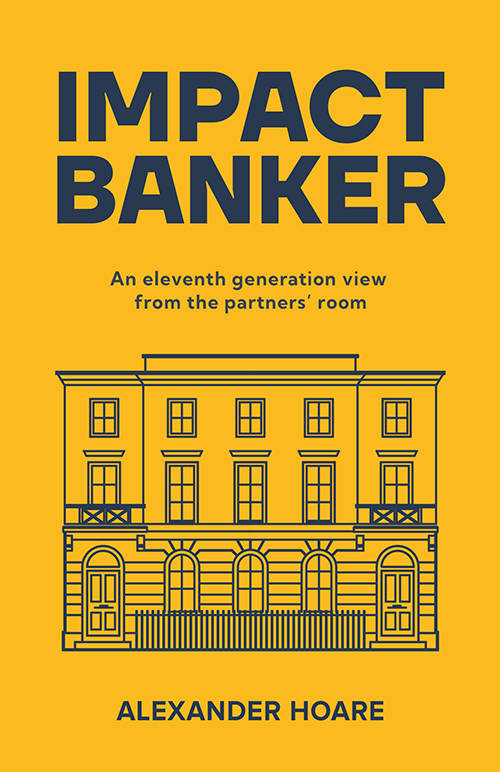
Buy your copy...