
Guy Wasko
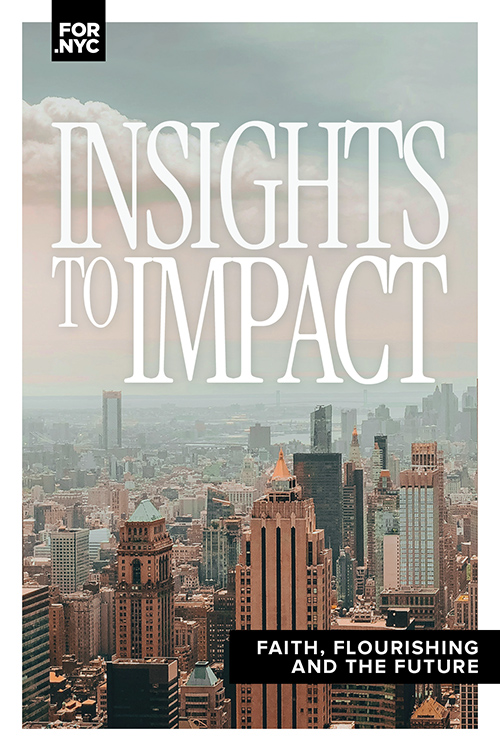
What if the spiritual hunger of a city wasn’t a problem to solve but a promise waiting to be fulfilled? That’s the central question driving Guy Wasko’s latest book, Insights to Impact: Faith, Flourishing and the Future. Drawing from groundbreaking research with the Barna Group, Wasko explores the state of human flourishing in New York City in 2025 and invites leaders, churches, and everyday citizens to turn data into action.
In a recent interview, Wasko shared the vision behind the book, his passion for New York City, and why faith communities are uniquely positioned to meet the challenges of modern urban life.
Having lived in Manhattan’s East Village since 2009, Wasko knows the city intimately. He speaks with deep affection about its pace, diversity, and density. “Humans are created to create,” he notes, pointing out that every morning millions of New Yorkers wake up asking what new thing they can contribute—whether that’s starting a business, writing a book, or simply helping a neighbor.
Yet beneath the vibrancy lies a quiet ache: anxiety, loneliness, financial pressure, and the search for meaning. Wasko’s book doesn’t shy away from these realities. Instead, it positions the Church and community leaders as catalysts for transformation, equipped with both compassion and credible data.
Insights to Impact is based on research conducted with the Barna Group. Wasko explains that their mission was to be “data-informed, not data-driven”—to listen and learn from research while still discerning action through wisdom and faith.
Some of the most striking findings he highlights include:
Wasko stresses that research alone is not enough—the goal is to turn insights into real-world action. “Everybody who reads this book should be inspired by at least one piece of data in their local context,” he says. “You don’t have to launch a citywide initiative. Maybe you just love your neighbor a little better, serve your boss a little better, or support your local school.”
Some practical lessons include:
Although the research was NYC-specific, Wasko believes the lessons are global. “These are uniquely human challenges and realities,” he explains. “While the numbers might be different where you live, the truth remains: we’re made for relationship.”
He also sees the book as a model for other cities. Communities elsewhere can use the same approach—combining data with practical steps—to shape healthier, more flourishing environments.
Insights to Impact is more than a book; it’s a roadmap for renewal. It challenges readers to see beyond statistics and step into action—what Wasko calls moving “from couch to community.”
For pastors, policymakers, nonprofit leaders, and everyday New Yorkers, the message is simple: the flourishing of a city depends on the flourishing of its people. And with faith, unity, and practical compassion, even the world’s busiest city can become a place of hope and transformation.
Buy your copy...
Buy your copy...

Buy your copy...