
Joel Arcus
What if the key to personal growth isn’t finding the right answer, but learning to live with the right question?
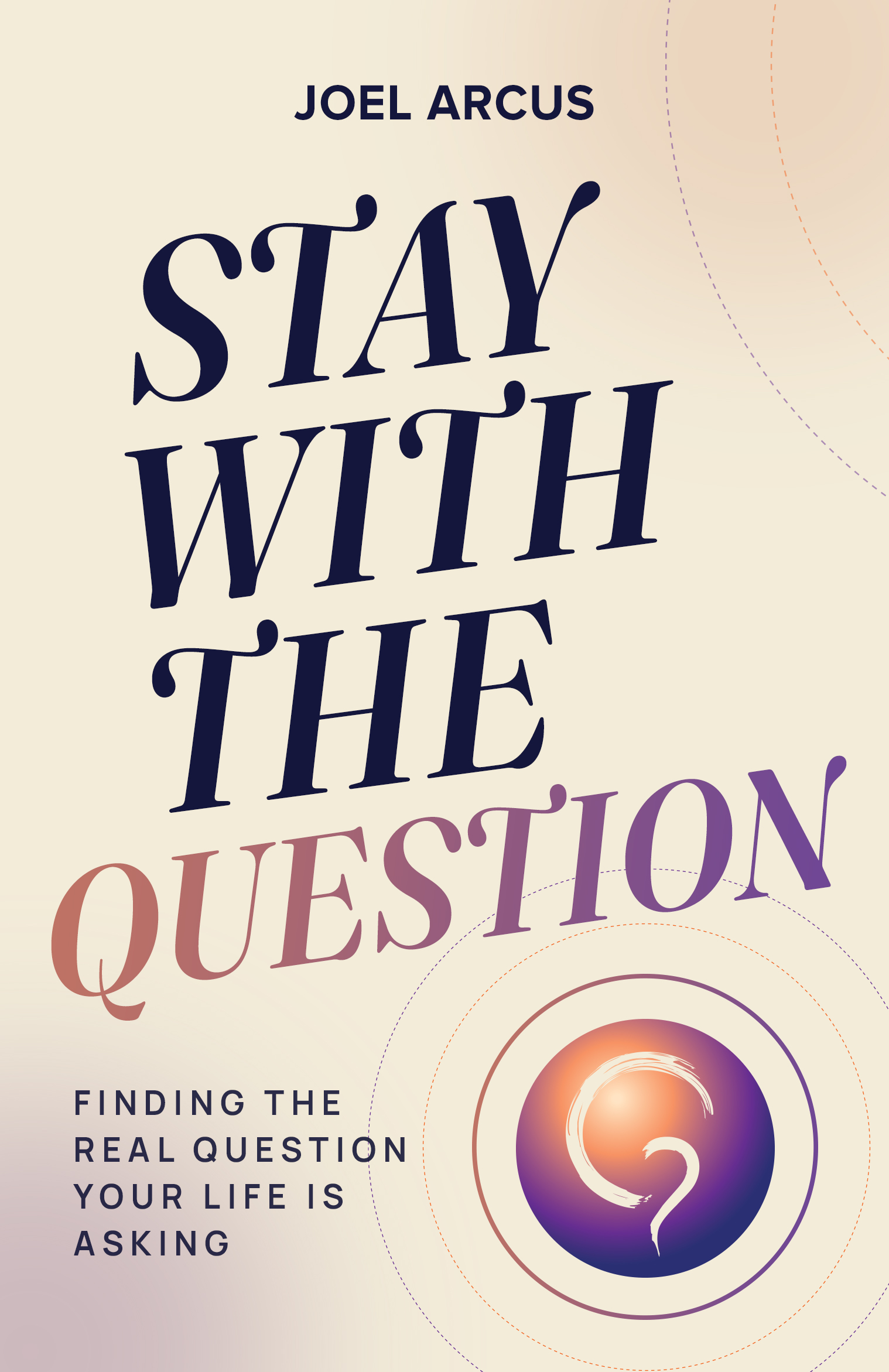
In a recent episode of the PublishU Podcast, host Matt Bird speaks with author, life and executive coach Joel Arcus about his book, Stay With The Question. Their conversation explores curiosity, personal transformation, the psychology of unanswered questions and why resisting the urge to find immediate answers can open us to possibilities we may otherwise never see.
For Joel, Stay With The Question is more than the title of a book. It represents an approach to life that has developed over decades of professional and personal experience.
Originally from Johannesburg, South Africa, Joel spent much of his professional life in the corporate and technology sectors. In the early 2000s, after becoming disillusioned with corporate life, he left his consulting role at Microsoft and took an unexpected turn: he spent three years teaching healing after qualifying as a Reiki master.
He later returned to the business world, but with a stronger focus on people.
Over almost two decades, Joel worked across human resources, learning and development, leadership development and e-learning. Eventually, after coming close to burnout, he stepped away from corporate life and became a full-time life and executive coach.
Today, based in Dubai, Joel has brought these different parts of his life together: business, leadership, coaching, personal development and a longstanding interest in how people transform.
That journey ultimately helped shape Stay With The Question.
One of the central ideas behind Joel’s book is deceptively simple: questions give our minds something to work with.
During the podcast, Joel recalls an idea from Harvard Business School professor Clayton Christensen that had remained with him for years: questions can create placeholders in the mind, giving future answers somewhere to land.
Joel began experimenting with this concept in his own life and coaching practice.
Instead of immediately trying to solve a challenge, what would happen if someone identified a meaningful question and continued living with it?
Questions such as:
What will it take for me to grow my business?
What needs to be true in my daily activities for my business to grow?
Or, on a deeply personal level:
What will it take for me to grieve my losses?
Rather than demanding an immediate response, these questions invite continued reflection.
Joel’s approach challenges something many of us have been taught from childhood.
At school, questions generally have answers. You learn the material, answer the question and move on to the next one. Finding the correct answer means the task is complete.
But life rarely works that way.
Personal growth, relationships, leadership, grief, business and purpose often involve questions without simple or definitive answers.
According to Joel, our minds naturally want to close these open loops. Once we find an answer that feels comfortable, we can stop searching for alternatives.
Stay With The Question encourages the opposite.
Instead of rushing towards certainty, remain curious.
Keep asking.
Keep noticing.
And remain open to more than one possible answer.
Joel also explores why keeping a question alive may change what we notice around us.
He compares it to buying a red car and suddenly seeing red cars everywhere. Those cars were already there, but they have become relevant to you, so you begin noticing them.
In a similar way, Joel suggests that holding an unanswered question can encourage us to recognise information, conversations, ideas and experiences that relate to it.
You might hear something during a podcast, read a sentence in a book or have a conversation with someone and suddenly recognise its relevance to a question you have been carrying.
Without that question in mind, you may have overlooked it completely.
For Joel, this is where curiosity becomes an important tool for personal transformation.
Does that mean we should walk around with dozens of unanswered questions?
Not necessarily.
Joel suggests that two, three or perhaps four meaningful questions at a time may be enough. You don’t need to consciously think about them every day.
Instead, the goal is to formulate questions that matter and allow yourself to return to them over time.
Some answers may arrive quickly. Others may evolve over months or years. And certain questions may never have one final answer at all.
Joel’s own exploration of grief is an example. His question about how to grieve his losses was not something he expected to resolve neatly. Instead, staying with it allowed him to explore emotions and experiences he had never fully processed.
The value was in the journey rather than reaching a definitive conclusion.
Joel originally began writing Stay With The Question partly to discover whether he could write a book at all.
The answer, as he says in the podcast, turned out to be yes.
But the process developed into something much larger.
Drawing on research into neuroscience and neuropsychology alongside his own experiences and coaching work, Joel created a book designed to take readers through their own process of discovery.
His goal is not to give readers another collection of predetermined answers. Instead, he wants them to become more comfortable with curiosity and uncertainty.
Because sometimes finding an answer too quickly can close a door.
Remaining curious keeps it open.
As Matt reflects during their conversation, it can be the difference between experiencing life in monochrome and discovering it in colour.
Stay With The Question is ultimately an invitation to reconsider our relationship with uncertainty. Rather than always asking, “What is the answer?”, perhaps there is another question worth considering: What might become possible if I stay with the question a little longer?
This article is based on an interview with Matt Bird, founder of PublishU, helping first-time and serial non-fiction authors to write, publish and market books worldwide.
Connect with Matt on Instagram 👉🏼 CLICK HERE or LinkedIn 👉🏼 CLICK HERE
Buy your copy...