
Paul Bulkeley
When architect and entrepreneur Paul Bulkeley first set sail on his career, he had no idea that one day his passion for business, design, and faith would converge into a global movement. Through his groundbreaking book, The BizMin Course, Paul challenges Christian entrepreneurs and business leaders to view their daily work not merely as a profession, but as a powerful form of ministry — one that can transform lives, communities, and nations.
Paul Bulkeley is the founder of Snug Architects, an award-winning architectural firm based in Southampton, UK. His projects range from large residential developments to community spaces and national landmarks such as Eternal Wall of Answered Prayer. Yet despite his success, Paul’s true calling didn’t stop at architecture.
Driven by a deep conviction that business is one of the most powerful tools for social change, he set out to help others merge faith and commerce. “My passion,” Paul explains, “is to combine my Christian faith and my business life — to do business as ministry.” This calling led him from the shores of England to the bustling streets of India, and later to communities across Africa, where he worked with thousands of churches and entrepreneurs to equip them for ethical, faith-driven enterprise.
The idea for The BizMin Course was born out of Paul’s years of mentoring business owners in developing nations. While volunteering in India, he noticed that centuries of missionary work had done little to alleviate systemic poverty — yet within two decades of market reform, the rise of local business and enterprise had lifted millions out of hardship.
Paul realised something profound: charity and government aid alone can’t end poverty — only enterprise can. But business without ethics risks exploiting the very people it seeks to empower. The solution, he believed, lay in teaching people how to align biblical values with business principles — creating enterprises that serve both God and society.
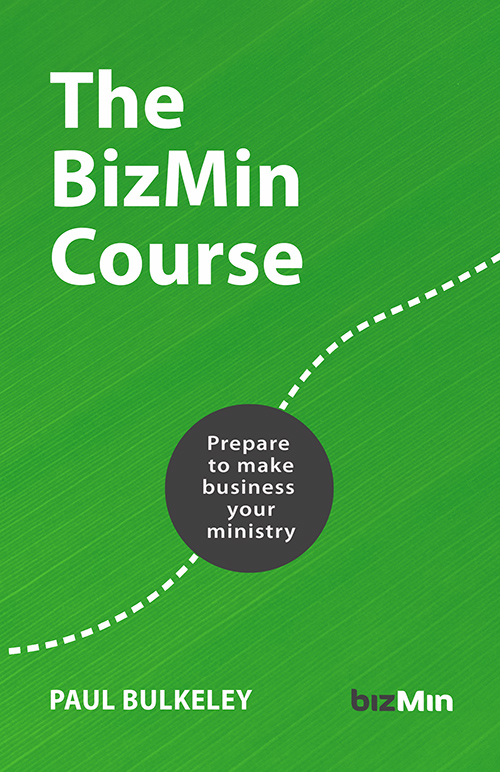
That conviction became the foundation of The BizMin Course, a ten-part study and workshop guide designed to help leaders turn their businesses into purpose-driven ministries. Each session explores themes like calling, purpose, profit, and legacy — guiding readers to see how their companies can glorify God while creating real-world impact.
Structured as both a self-study handbook and a group-based course, The BizMin Course walks participants through ten key sessions, typically delivered in two-hour workshops. The journey begins with the question: Why does business need transforming? From there, it dives into understanding personal purpose, discerning God’s calling in one’s career, and learning how to use work as a ministry.
The core of the course focuses on the concept of “business as ministry” — exploring how everyday operations, leadership decisions, and company culture can become acts of worship. Paul explains that it’s not about adding faith on top of work; it’s about integrating faith within work so that excellence, integrity, and service to others become natural outcomes.
Later sessions tackle the often-challenging topics of profit and purpose, helping entrepreneurs reconcile financial success with spiritual integrity. The course concludes with “Leaving a Legacy,” where business leaders are encouraged to build companies that outlive them — organisations grounded in values that inspire future generations.
One of the most powerful ideas in Paul’s teaching is that profit and purpose are not enemies. Rather, when business leaders approach profit through the lens of purpose, they can use success as a tool for good — creating jobs, building communities, and supporting charitable work.
As Paul puts it, “The challenge is to do business in a way that’s good for the many, not just the few — to prosper society while aligning with Christian values.” For him, running a business ethically isn’t just a moral duty; it’s a way of worshipping God through meaningful work.
In his travels, Paul has seen firsthand the power of entrepreneurship to transform communities. From small business owners in rural India to emerging leaders in Africa, the same pattern emerges: when people are equipped to run their businesses with integrity and vision, poverty decreases, dignity increases, and hope returns.
But The BizMin Course isn’t only for developing economies. Paul believes that professionals and business owners everywhere — including in the UK — need to rediscover the deeper purpose of work. Too many see their jobs as a daily grind, merely a way to pay the bills. By shifting their mindset to view work as ministry, they can find renewed meaning and joy in what they do.
As Paul explains, “Those of us who lead businesses have the privilege and responsibility to influence culture. We can set the tone, improve the lives of others, and make our workplaces meaningful. Just providing worthwhile employment can itself be a ministry.”
Since its creation, The BizMin Course has reached leaders across continents, languages, and cultures. Its principles — faith, integrity, stewardship, and service — resonate universally. Whether in a tech start-up in London or a family-run shop in Nairobi, the message is the same: your business can be a platform for transformation.
Paul’s hope is that The BizMin Course continues to inspire entrepreneurs worldwide to see their businesses as part of God’s plan. He envisions a generation of Christian leaders who not only pursue excellence but also build companies that embody compassion, fairness, and eternal purpose.
Buy your copy...