
Aaron J. Anderson
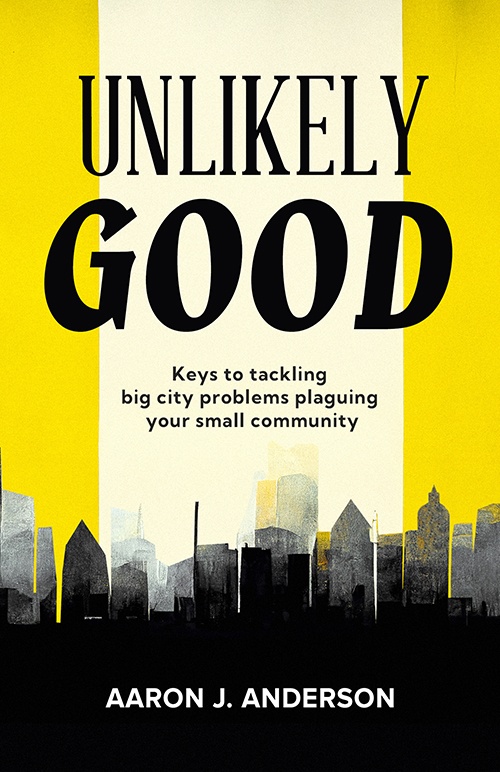
In a recent episode of the PublishU Podcast, author, pastor, and community leader Aaron J. Anderson shared the story behind his book Unlikely Good and the real-world experiences that shaped its message. The conversation explores how leaders can take on complex social challenges and why meaningful, lasting change often begins at a local level.
Aaron Anderson lives and works in York, Pennsylvania—a small city on the U.S. East Coast that faces many of the same issues as larger urban centres. Poverty, under-resourced schools, and strained relationships between communities and institutions are part of everyday life. For many residents, these challenges can feel overwhelming and permanent.
Unlikely Good challenges this mindset. Anderson believes that while small towns may struggle with big problems, they are also uniquely positioned to address them. Their size allows leaders to build relationships, foster trust, and collaborate in ways that are often impossible in much larger cities.
A central theme in the book is the idea of “wicked problems.” These are issues that have no single cause or easy solution. Problems like failing education systems, community violence, homelessness, and racial division are deeply interconnected and influenced by history, economics, policy, and human behaviour.
According to Anderson, wicked problems demand a different approach. Instead of quick fixes, they require long-term thinking, humility, and a willingness to work across differences. Progress is often slow, imperfect, and nonlinear—but it is possible.
One of the most compelling examples Anderson shares is his work with Logos Academy, a Christ-centred K–12 school serving children from some of the most under-resourced communities in the United States. The school intentionally prioritises students living in poverty and operates within a district historically labelled as “failing.”
Despite these challenges, the outcomes are remarkable. Logos Academy has achieved near-total graduation rates, and a significant percentage of its students have earned full scholarships to universities. For Anderson, this is a clear example of Unlikely Good—proof that sustained investment, belief in young people, and relational leadership can change lives.
Another powerful story discussed in the podcast centres on community-police relations. In York, deep mistrust between law enforcement and communities of colour dates back decades, including violent racial unrest in the late 1960s. These wounds did not heal on their own.
Rather than avoiding the issue, Anderson helped bring Black faith leaders and police chiefs together for ongoing conversations. What began as cautious dialogue evolved into ten years of consistent relationship-building. Today, leaders on both sides describe genuine friendships and increased trust.
This experience reinforced one of Anderson’s core insights: many of the hardest community problems are relational before they are structural. When people are willing to sit at the same table, listen, and stay committed over time, meaningful change becomes possible.
In Unlikely Good, Anderson outlines a simple but powerful starting point for change: identify what breaks your heart in your community. According to him, sustainable leadership is not driven by ego or ambition, but by compassion and moral urgency.
The book introduces a three-stage process—Dream, Discern, and Deliver. Leaders are first encouraged to dream about what could be different, then discern a thoughtful and sustainable plan, and finally deliver that vision with patience and resilience. The dreaming stage, Anderson notes, is often the most neglected—but it is where hope is born.
Throughout the podcast, Anderson makes it clear that Unlikely Good is written especially for emerging leaders and those who may feel discouraged. Many people attempt to create change, experience setbacks, and quietly give up. Anderson hopes the book will inspire them to try again—with better tools, stronger partnerships, and a longer-term perspective.
One of the hardest parts of leadership, he admits, is deciding what not to do. Writing the book itself reinforced this lesson. With decades of experience to draw from, narrowing the focus was challenging—but necessary to ensure clarity and impact.
As the conversation comes to a close, Anderson shares his deepest hope for the book: that it would encourage leaders to believe real change is possible, even when the problems feel overwhelming. He wants readers to see that thoughtful planning, shared responsibility, and relational trust can transform communities over time.
Unlikely Good is not a promise of easy success. It is an invitation—to stay, to listen, to collaborate, and to keep going. For anyone burdened by the challenges in their town or city, the message is clear: meaningful change may be difficult, but it is never out of reach.
Buy your copy...