
John G. Cressman
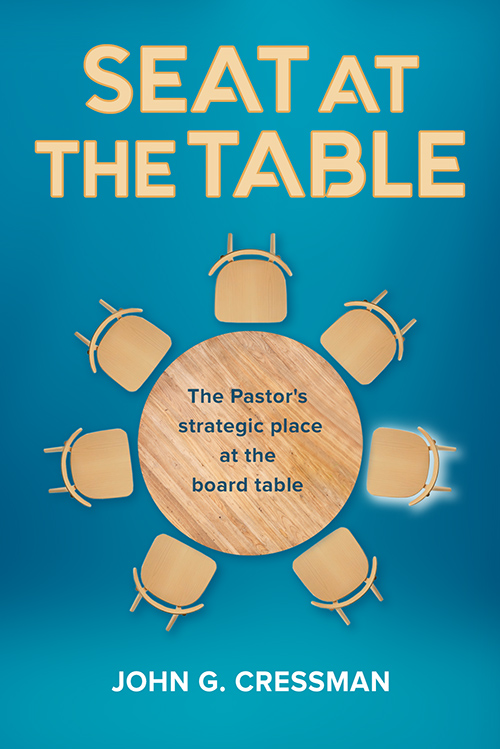
Churches and nonprofits often rise or fall on the strength of one critical relationship: the partnership between the board and the senior leader. For pastors, navigating this relationship can be confusing, emotionally complex, and sometimes overwhelming. In a recent PublishU Podcast interview, Canadian denominational president and longtime pastor Dr. John G. Cressman shared powerful insights from his newest book, Seat at the Table, a practical pocket guide designed to help pastors take their rightful, strategic place at the church board table.
As Cressman explains, many pastors are never taught how to lead with their board—only how to lead their congregation. This gap creates misunderstandings, frustration, and unnecessary conflict. Seat at the Table steps into this gap with clarity, humility, and the wisdom of decades of lived experience.
Cressman’s first book, Pull Up a Chair, was written to equip church board chairs—volunteers who often have passion but little formal governance training. But while coaching more than 85 board chairs across Canada, he realized something important: pastors also need training. Pastors sit at the board table regularly, but most have never been shown how to function effectively in that space.
That insight led to Seat at the Table, a companion book written specifically for pastors. While the first book equips the board chair, the second equips the pastor—ensuring both roles work in harmony rather than tension.
In the interview, Cressman highlights three common tendencies pastors exhibit in board settings. These tendencies are not signs of incompetence—they’re simply the predictable habits of leaders who were never trained for governance roles.
Pastors may unintentionally take over responsibilities that belong to the board—chairing meetings, training board members, influencing decisions too heavily, or acting as the “default” leader in the room. They may do this because they care deeply, or because they’re used to leading everything else in the church. But overstepping disrupts shared leadership and weakens governance.
Sometimes pastors avoid the board altogether—holding back information, not disclosing challenges fully, or trying to secure decisions without meaningful board input. Cressman notes that this isn’t usually deceptive intent but human nature. Still, boards cannot make wise decisions without full transparency.
Pastors may become passive or disengaged, especially if they’ve had difficult experiences with boards in the past. This results in missed insight, weakened trust, and a breakdown in collaborative leadership.
Cressman’s message is simple: pastors must learn their proper place at the table—not dominating, not disappearing, but participating with humility and clarity.
Cressman is honest that boards also struggle with boundaries. Many boards, especially in church contexts, fall into micromanagement, drifting into day-to-day operations or interfering with pastoral decisions. This creates frustration for pastors and inefficiency for the organization.
Healthy governance requires both parties to stay in their lane while moving toward the same mission—something Cressman describes as “driving in the same vehicle down the road together.”
One of the strengths of Seat at the Table is its concise, pocket-sized format. Pastors are busy; many are bi-vocational, overwhelmed, or stretched thin. Cressman intentionally created a short, practical resource that can be read quickly and applied immediately.
The book includes real-life stories, personal confessions, and practical scenarios—making it both relatable and actionable. It’s not theory; it’s lived experience.
Throughout the conversation, Cressman emphasizes that the goal is shared leadership rooted in trust. When pastors and boards operate as partners rather than opponents:
Pastors stop seeing the board as an obstacle, and boards stop viewing the pastor as a risk to control. Instead, both groups become co-laborers listening to God together.
Cressman also hints that more tools may be coming. He has already written resources on board secretaries and minute-taking, and there is demand for guides on roles like treasurer or board member basics. While he may eventually move to new topics, he acknowledges that the “leadership table” theme could naturally expand into a helpful series.
For Cressman, these books are more than teaching tools—they are part of his legacy. After decades of coaching pastors, mediating difficult board situations, and supporting churches across Canada, he hopes these books will allow him to help leaders proactively rather than only stepping in when things go wrong.
The impact is already evident. Pastors and board chairs across denominations are applying his insights, leaders are gaining confidence, and churches are experiencing healthier governance and communication.
Seat at the Table is a powerful resource for pastors who want to lead well alongside their boards. It offers clarity, humility, and deeply practical guidance for one of the most important—and most neglected—areas of church leadership: how pastors and boards work together.
If your church or nonprofit wants healthier leadership, stronger unity, and clearer decision-making, Cressman’s pocketbook offers a roadmap toward shared mission and Spirit-led partnership.
Buy your copy...

Buy your copy...