
David Warren & Elise Heerde
David Warren joins Matt Bird on the PublishU Podcast to discuss his new book, co-authored with Elise Heerde, exploring coercive leadership, religious trauma and the importance of creating safer, healthier church communities.
Churches are intended to be places of belonging, compassion and spiritual growth. But what happens when leadership crosses the line from guidance into manipulation and control?
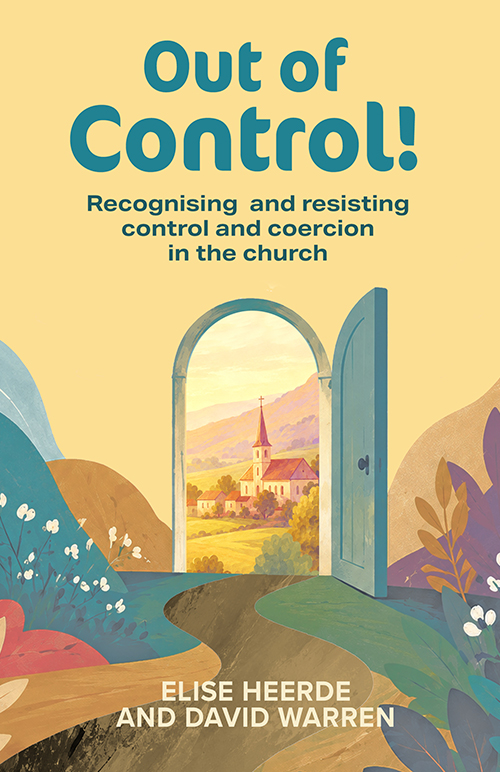
In a recent episode of the PublishU Podcast, host Matt Bird spoke with author David Warren about his new book, Out of Control! Recognising and Resisting Control and Coercion in the Church, co-authored with Australian mental health practitioner and trauma specialist Elise Heerde.
Drawing on decades of pastoral experience, personal reflection and professional expertise, the book examines how coercive leadership develops within religious communities and what churches can do to create healthier, psychologically safer environments.
For Warren, who spent more than 40 years as a pastor, the subject is deeply personal.
During the interview, Bird asked Warren to explain what coercive and controlling leadership actually means.
Warren described it as a situation where leaders use their position, influence or authority to manipulate people's decisions and behaviour, gradually undermining their personal autonomy.
In a healthy church environment, individuals should feel comfortable questioning ideas, expressing concerns and making decisions according to their own conscience. However, in controlling religious environments, disagreement can be interpreted as rebellion or disobedience.
People may begin making decisions not because they genuinely believe in them, but because they fear losing friendships, community acceptance or their sense of belonging.
This creates an unhealthy relationship between leadership and congregation members, where maintaining approval becomes more important than personal conviction.
Warren emphasised that coercive control is not exclusive to churches. Similar dynamics can occur in businesses, charities, educational institutions, families and other organisations.
The central issue is not leadership itself, but how power is exercised.
One particularly important topic discussed during the podcast was the use of religious authority to reinforce controlling behaviour.
Bird introduced the concept of the "God card", referring to situations where leaders invoke divine authority to justify decisions or discourage disagreement.
Warren explained that this can make coercive control particularly powerful within faith communities.
For people whose religious beliefs form a central part of their identity, being told that God demands a particular action can create intense emotional pressure.
Rather than questioning a leader's interpretation, individuals may feel that questioning the instruction means questioning God.
This can lead to guilt, confusion and emotional distress, particularly when individuals are discouraged from exploring their own beliefs.
Recognising spiritual manipulation is therefore an important step towards preventing religious trauma and encouraging healthier relationships within churches.
An interesting aspect of Out of Control! is its recognition that controlling behaviour does not always flow from leaders towards congregation members.
Warren explained that pastors and church leaders can themselves become victims of manipulation.
For example, influential families, church boards or financial contributors may attempt to control leadership decisions by threatening to withdraw funding or reduce a pastor's salary.
These situations demonstrate how coercive behaviour can develop wherever individuals or groups hold disproportionate power.
Warren and Heerde encourage readers to consider the wider culture of an organisation rather than simply dividing people into leaders and victims.
A healthy church requires accountability, mutual respect and appropriate boundaries at every level.
Although the book addresses difficult subjects, its purpose is constructive.
Rather than simply criticising religious institutions, Warren and Heerde explore practical ways to build healthier church communities.
Their approach recognises that strong leadership and personal freedom are not mutually exclusive.
Churches can have capable, confident leaders while still encouraging open dialogue, respecting individual autonomy and creating environments where people feel safe expressing concerns.
The authors also acknowledge the complexity of the subject.
During the writing process, Warren and Heerde did not always agree on every issue. Rather than forcing their perspectives into a single rigid framework, they embraced those differences.
This reflects an important principle of the book: healthy communities should allow room for disagreement.
There is no universal checklist for creating the perfect church culture. However, recognising unhealthy power dynamics and being willing to change established practices can make a meaningful difference.
Warren's perspective is particularly significant because he openly acknowledges his own experiences as a church leader.
Reflecting on his pastoral career, he admitted that he had sometimes contributed to the very problems he now seeks to address.
This willingness to examine his own leadership forms an important part of the book's message.
Recognising coercive behaviour is not necessarily about identifying villains. It is also about understanding how harmful practices can become normalised within organisational cultures.
By encouraging honest reflection, Out of Control! offers church leaders an opportunity to reconsider how they exercise authority and support the people entrusted to their care.
When Bird asked what he hoped the book would achieve, Warren offered a surprisingly modest answer.
Rather than focusing primarily on sales or recognition, he explained that he would consider the book successful if just two or three churches changed their practices and became safer places as a result.
Whether that means a congregation handling concerns more compassionately or a pastor becoming more aware of their leadership behaviour, even small improvements could have lasting consequences.
Ultimately, Out of Control! is a call for churches to rediscover the values of compassion, accountability, freedom and genuine community.
For church leaders, faith communities and anyone interested in understanding religious coercion and spiritual abuse, the book provides an opportunity for meaningful reflection and change.
Out of Control! Recognising and Resisting Control and Coercion in the Church, by Elise Heerde and David Warren, is published by PublishU.
Watch or listen to the full PublishU Podcast interview with Matt Bird and David Warren to discover more about the inspiration behind the book and its message for faith communities worldwide.
Buy your copy...

Buy your copy...