
Chris Jones
Schools are under growing pressure to deliver better outcomes while managing increasingly complex financial and operational challenges. For Chris Jones, founder of Smart Curriculum and author of The Efficient School, the answer is not simply to demand more money. Instead, school leaders need to take a closer look at how existing resources are being used and whether their spending genuinely reflects their values and priorities.
Speaking to Matt Bird on the PublishU podcast, Jones explained that his latest book is part of a planned four-book series exploring the key elements that enable schools to provide effective education. Following The Perfect Timetable, The Efficient School focuses on money, resources and the question of how schools can achieve better value from what they already have.
Jones brings more than four decades of experience to the conversation. He began teaching professionally in 1985 and spent 25 years working directly in schools, progressing from trainee teacher to school leader. For the past 16 years, he has worked independently with school leaders, continuing to spend time in schools, classrooms and leadership offices.
That practical experience shapes his approach. While Jones recognises the growing importance of research-led education and academic thinking, his particular interest is in translating theory into something that works in real schools.
His philosophy is essentially about "walking the walk, not just talking the talk": understanding research and then asking what it actually looks like in practice. For school leaders, that means moving beyond educational theory to consider how strategies can be implemented effectively within their own circumstances.
At the heart of The Efficient School is a deceptively simple question: are schools making the best possible use of the resources they have?
Jones acknowledges that schools, particularly those in the public sector, can always make a case for additional funding. However, he argues that there is another important question to ask first: are current resources being used as effectively as possible.
In England, Jones points to education as an enormous public investment and argues that taxpavers are entitled to ask whether that investment is achieving its intended purpose. Rather than simply focusing on whether schools meet externally imposed measures and standards, he believes leaders need to understand what they are actually doing, why they are doing it and whether it is fit for purpose.
This makes efficiency much more than a cost-cutting exercise. It is about aligning resources with educational priorities.
One of the biggest barriers to efficiency, according to Jones, is legacy practice: continuing to do something simply because "we've always done it this way".
For schools and other public-sector organisations, changing established systems can be difficult. Political cycles, organisational habits and the sheer effort required to change large systems can all create resistance. Yet changing circumstances make a fresh examination increasingly important.
Jones highlights falling birth rates as one example. Smaller numbers of children could mean smaller class sizes and changes to the funding available to schools.
These demographic changes are being discussed in countries around the world, meaning that schools cannot necessarily rely on historical patterns continuing indefinitely.
The challenge, therefore, is to develop a deeper understanding of how a school operates and whether its current model will remain sustainable.
Perhaps one of the most thought-provoking ideas in the discussion is that a school's financial accounts can reveal its priorities more clearly than its mission statement.
Jones suggests that school leaders should examine where their money actually goes. If a school says it values particular approaches to learning, inclusion or supporting learners, but its spending does not reflect those priorities, there may be a disconnect between its stated values and its actual practice.
This is why The Efficient School encourages reflection rather than simply prescribing a fixed formula. Jones recommends asking questions such as: What are our priorities? How well do our systems serve them? Are particular practices necessary? Are they simply legacy practices? And what could we do differently?
For school leadership teams, these questions can provide a valuable starting point for meaningful change.
Interestingly, Jones recommends that school leaders who want to use The Efficient School should begin with its final chapter, which focuses on leadership questions, evaluation and review.
Working through the questions as a leadership team can expose differences in perception and help leaders establish greater alignment between their vision, values, priorities and spending.
The process is not about discovering a single perfect model. Instead, it is about understanding what works in a particular school and making informed decisions about what needs to change.
That principle also connects The Efficient School with the wider Smart Curriculum series. The books are designed to address different but connected areas of school improvement, including curriculum design, timetabling, resources and leadership.
The series will ultimately look beyond financial efficiency towards the kind of education young people need for the future. Jones identifies creativity, character and enterprise as three important elements of effective learning.
His vision extends beyond examination results. Schools should prepare learners for work, life and lifelong learning, while developing skills such as critical thinking, problem-solving and teamwork.
For Jones, however, there is no universal curriculum that can simply be taken "off the shelf". Schools need to take strong ideas and adapt them to their own communities, learners and economic circumstances. He describes this as making the curriculum their own.
Ultimately, The Efficient School offers a powerful challenge to school leaders: before asking what more they need, ask whether they fully understand what they already have. By questioning legacy practices, examining spending and aligning resources with educational values, schools may discover new opportunities to become more effective, more sustainable and better equipped to serve their learners.
This article is based on an interview with Matt Bird, founder of PublishU, helping first-time and serial non-fiction authors to write, publish and market books worldwide.
Connect with Matt on Instagram 👉🏼 CLICK HERE or LinkedIn 👉🏼 CLICK HERE
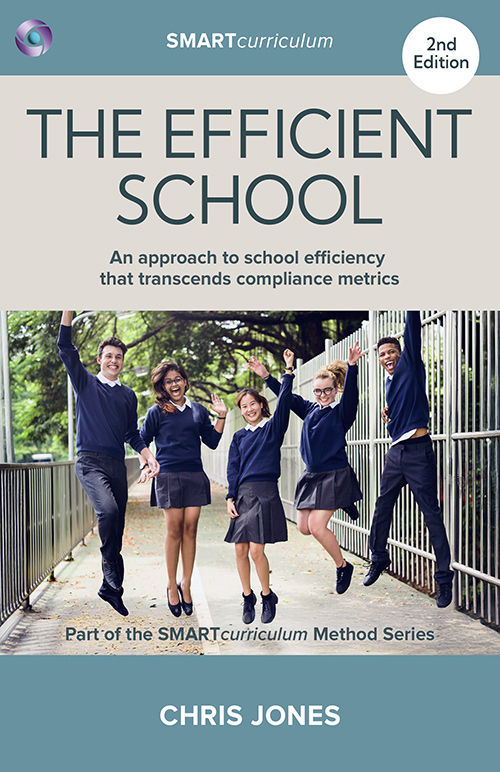
Buy your copy...
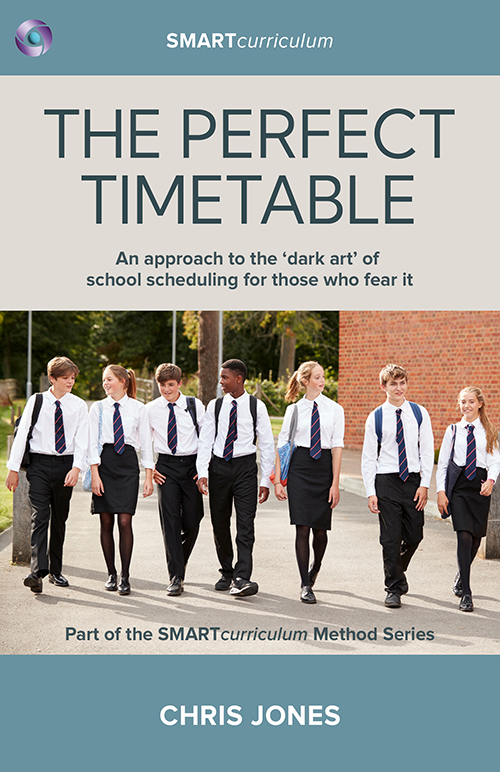
Buy your copy...